What Minimally Invasive Surgery (MIS) is — and isn’t
MIS allows deformity correction through smaller incisions, preserving structures and reducing surgical trauma. This often translates into less postoperative pain, faster functional recovery, and discreet scars.
MIS does not mean “simple surgery”. Outcome quality depends on indication, planning and precise execution.
- Millimetric portalsMinimal soft-tissue disruption.
- Anatomical correctionGoal: align and restore function.
- MethodPredictability requires controlled technique.
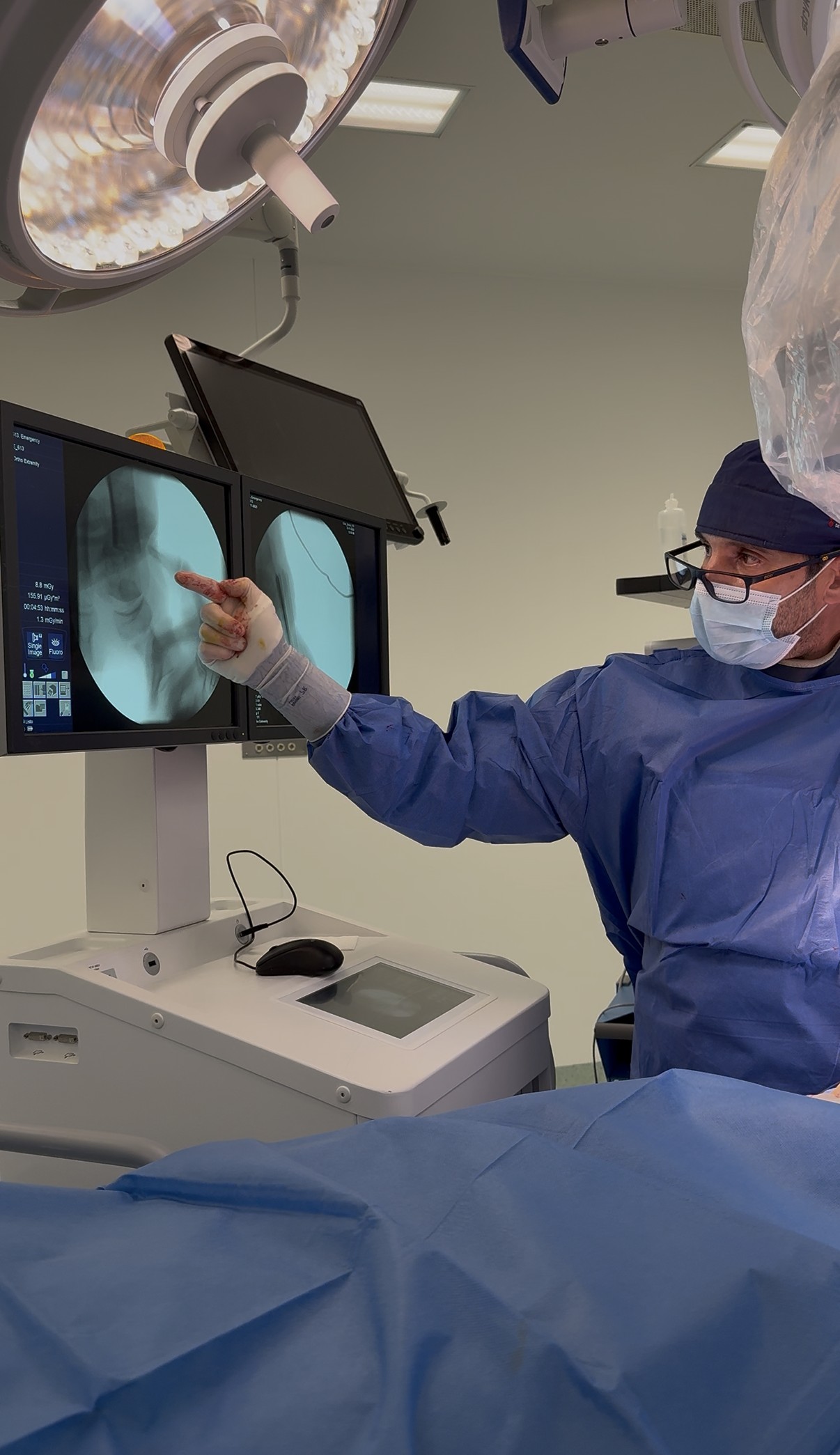
Ultrasound-Guided Microsurgery
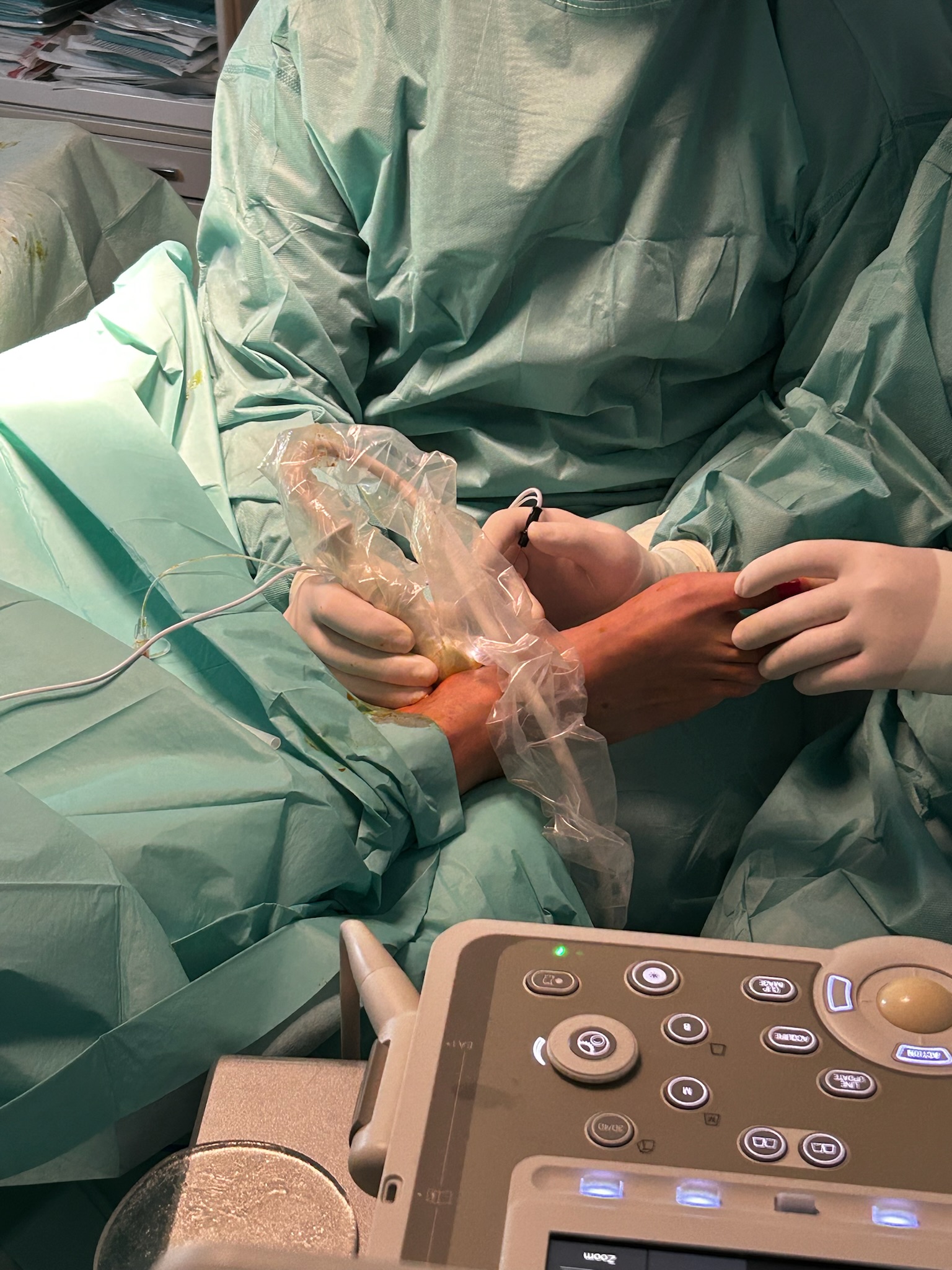
Musculoskeletal ultrasound improves clinical decision-making and increases safety by enabling visualization of relevant structures (soft tissues, pathways and sensitive areas) and reducing reliance on palpation alone.
- See critical structuresMore control and lower iatrogenic risk.
- Confirm positioningMore consistency in delicate maneuvers.
- More refined planningMore rigorous indication, especially in complex cases.
What changes in practice for the patient
The difference isn’t just “having MIS”. It’s how it’s executed and how anatomy is preserved.
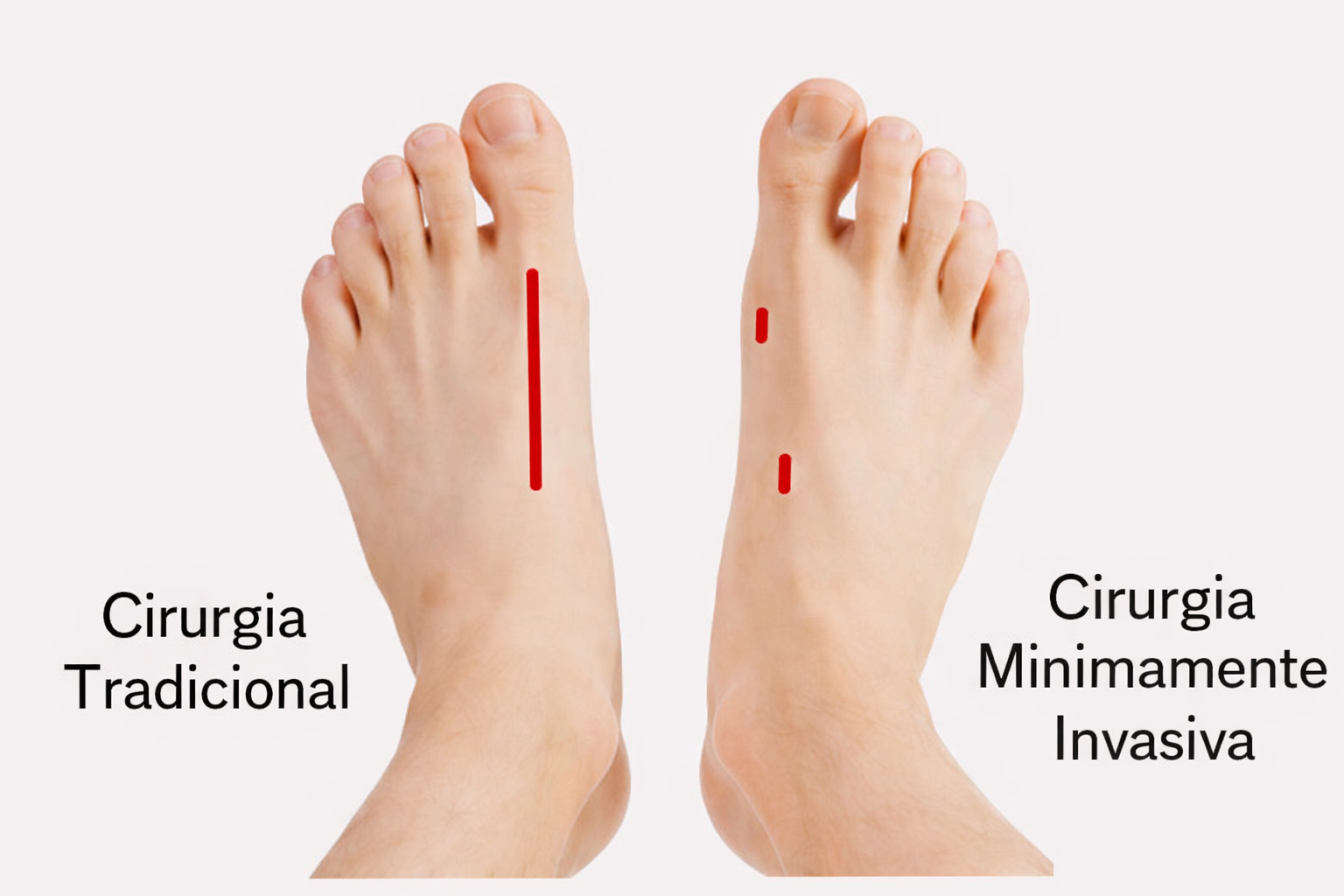
Conventional surgery
- Larger incisions
- More soft-tissue disruption
- Longer recovery
- More visible scars
Microsurgery / MIS
- Millimetric portals
- Maximal preservation
- Earlier protected weight-bearing
- Discreet scars
Indications and conditions treated
Indication is always individualized and confirmed by clinical and imaging assessment.
Functional recovery: realistic expectations
Recovery varies by condition, procedure and individual response. The goal is a safe functional return, with progression guided by clinical criteria.

Book an ultrasound assessment
Triage and booking via WhatsApp. Indication is always individualized.
FAQ — Straight to the point
Will I need crutches?
In most cases, no. Protected weight-bearing with post-op footwear is typical. It depends on the procedure.
Is MIS indicated for all cases?
No. Indication is individualized, based on clinical exam and imaging.
When can I drive?
It varies with the operated foot and functional progress. It’s decided at follow-up using safety criteria.